Roof rats exploit structural vulnerabilities created by Houston's dense coastal foliage and intense Gulf storms. The species runs power lines, tree canopies, and tall landscaping directly onto asphalt shingle roofs. In…
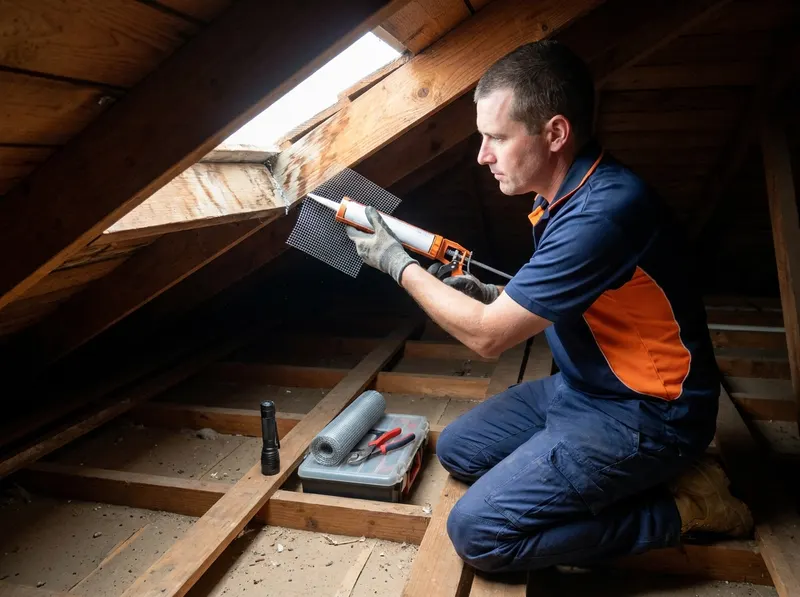
Roof rats exploit structural vulnerabilities created by Houston's dense coastal foliage and intense Gulf storms. The species runs power lines, tree canopies, and tall landscaping directly onto asphalt shingle roofs. In older homes across The Heights, Montrose, and West University Place, roof rats consistently gain entry through rotted fascia boards, unmeshed soffit vents, and exposed ridge-vent junctions. Modern builds and expansive estates in Memorial, River Oaks, and Kingwood see identical attic penetrations around HVAC chase lines, copper refrigerant pipe gaps, and zero-clearance chimney trim. A mature roof rat squeezes through an opening just 0.5 inches wide, which matches the diameter of a standard US nickel. Trapping alone fails when structural entries remain open, because foreign rats follow pheromone trails straight back into the soffits within 48 to 72 hours of an open trap sequence.
Effective exclusion requires a clinical, multi-stage barrier method rather than temporary expanding foam, which rodents chew through in under 20 minutes. Exterior mechanical sealing uses heavy galvanized steel wire cloth, concrete patches, and metal flashing to secure dormers, gable vents, plumbing stacks, and roof-to-fascia gaps along every square foot of the roofline. In high-humidity bayou zones near Clear Lake City, Meyerland, and Oak Forest, storm water runoff softens wood decking, allowing roof rats to rapidly enlarge minor gaps. Once all secondary access pathways are secured, one-way exit tunnels or specialized lethal snap-trap grids inside the attic drop the remaining population to zero inside 7 to 10 days. The mechanical intervention eliminates recurring toxic rodenticides from attic voids, preventing secondary poison hazards to pets and eliminating foul carcass decomposition behind bedroom drywall.
Deciding between routine trap-only maintenance and complete structural exclusion comes down to property permanency. Routine baiting traps individual adult rats but leaves open structural highways for new colonies every autumn and spring; exclusion eliminates the entry point permanently, requiring a higher initial material investment. The process follows four concrete steps:
1. Complete attic footprint mapping to identify electrical wiring gnaw marks, duct run tears, and primary grease rub marks (sebum trails).
2. Elevation inspections across the full exterior perimeter using 24-foot extension ladders to locate every gap exceeding 0.5 inches.
3. High-grade hardware fastening: riveting 19-gauge, hot-dipped galvanized mesh and sheet metal over vulnerable timber joints, AC chases, and roof returns.
4. Interior suppression and attic sanitation: deploying monitored lethal mechanical stations in attic runs, vacuuming droppings with true HEPA equipment, and treating insulation with an enzymatic odor neutralizer.
Every job gets a firm, written price after a free on-site visit.
Tell us about your attic roof rat exclusion job in Houston and we'll send a clear, written quote, usually the same day.
 Vandero Insect Elimination