Targeted thermal heating forces ambient indoor temperatures between 122 and 135 degrees Fahrenheit, a range verified to coagulate bed bug cellular proteins and neutralize insect eggs within 90 minutes. In high-humidity…
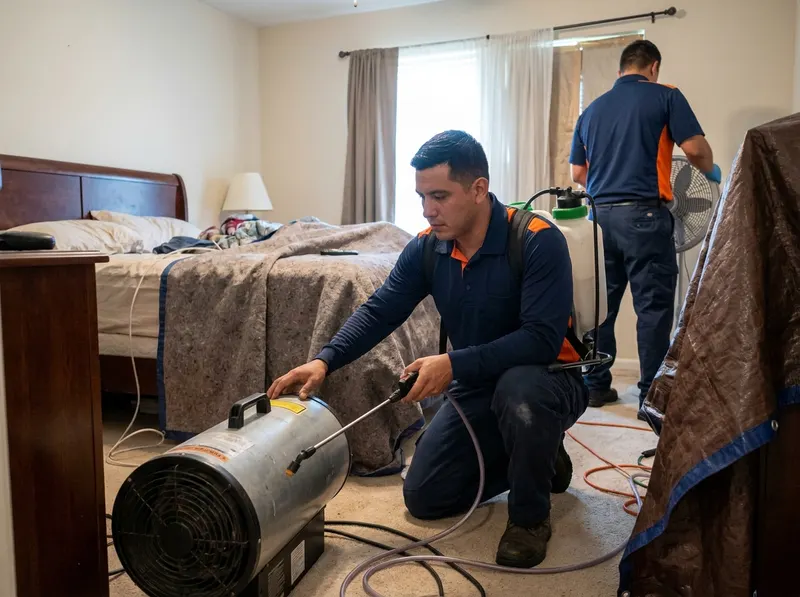
Targeted thermal heating forces ambient indoor temperatures between 122 and 135 degrees Fahrenheit, a range verified to coagulate bed bug cellular proteins and neutralize insect eggs within 90 minutes. In high-humidity Gulf Coast environments like Houston, ambient moisture slows heat penetration through thick textiles, requiring monitored high-velocity air movers to push convective heat into wall voids and subfloors. A single thermal cycle resolves acute infestations without multi-week evacuation, whereas conventional chemical-only spray protocols require 2 to 3 separate applications spaced 14 days apart to catch emerging nymphs. The operational trade-off centers on preparation intensity: thermal remediation demands removing aerosol cans, wax candles, and temperature-sensitive electronics from treatment zones before equipment activation.
Local structural dynamics across Harris County dictate the remediation profile. Historic pier-and-beam bungalows in The Heights and Montrose often experience draft loss through subflooring, requiring supplementary perimeter chemical barriers to prevent insects from escaping into unheated crawl spaces. Conversely, concrete slab foundations common in Meyerland, Oak Forest, and Memorial retain heat efficiently, enabling pure convective heat to saturate baseboards where bed bugs harbor. Kingwood and Clear Lake City properties frequently contend with elevated humidity levels that cause over-the-counter pyrethroid sprays to degrade prematurely; clinical formulations utilize microencapsulated residuals that remain active across baseboards and behind switch plates without producing noxious lingering odors.
Technicians deploy a standardized three-step protocol to secure structural clearance: 1. Continuous digital thermal logging measures surface temperatures across mattress seams and wall cavities to confirm heat penetration reaches the 122-degree threshold. 2. Mobile electric or indirect-fired heating units maintain lethal exposure periods for a minimum of 4 consecutive hours. 3. Application of non-repellent chemical barriers around plumbing penetrations and room perimeters stops bed bugs from migrating to adjacent units in multi-family structures or nearby living spaces in West University Place and River Oaks residences.
Every job gets a firm, written price after a free on-site visit.
Tell us about your bed bug thermal and chemical remediation job in Houston and we'll send a clear, written quote, usually the same day.
 Vandero Insect Elimination