Commercial food preparation facilities across Harris County face acute pest pressures fueled by relentless ambient heat and relative humidity consistently exceeding 75%. In busy dining corridors like Montrose, The…
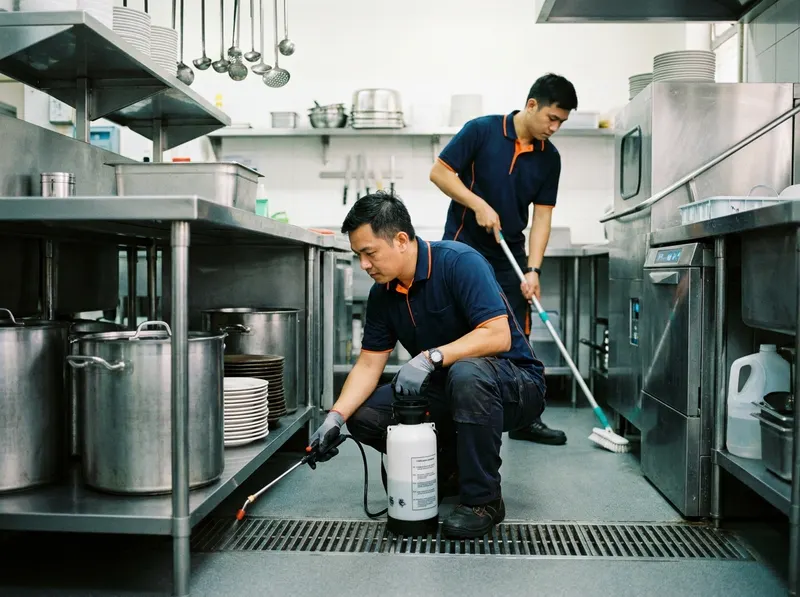
Commercial food preparation facilities across Harris County face acute pest pressures fueled by relentless ambient heat and relative humidity consistently exceeding 75%. In busy dining corridors like Montrose, The Heights, and West University Place, grease traps, cracked floor grout, and cast-iron floor drains collect layers of organic matter. Retail over-the-counter surface sprays merely disperse adult roaches deeper into wall voids without neutralizing the food substrate beneath heavy cooking equipment. Bioremediation injects live, non-pathogenic bacterial strains directly into lateral lines and structural junctions, converting putrid grease into water and carbon dioxide to physically remove the harborage zones that shelter insect colonies.
Selecting standalone chemical extermination over comprehensive bioremediation leaves kitchens vulnerable to rapid re-infestation within 10 to 14 days. Chemical sprays cannot penetrate solidified grease deposits beneath a six-burner range, and surface insecticides break down rapidly under daily high-temperature washdowns. Bioremediation operates as an active biological barrier: while targeted micro-encapsulated compounds neutralize active insect populations, probiotic foam consumes the subterranean biofilm that feeds fly larvae. The operational trade-off is mechanical downtime: kitchens must pause line operations during application to ensure floor drains remain dry for 60 to 90 minutes post-treatment, allowing microbial cultures to anchor.
From high-volume catering kitchens in River Oaks and Memorial to strip-center eateries in Meyerland, Oak Forest, and Clear Lake City, local drainage infrastructures vary widely. Older buildings near Buffalo Bayou frequently contain porous concrete subfloors and legacy cast-iron pipes, requiring high-pressure foaming to coat pipe circumferences fully. Modern suburban builds in Kingwood utilize PVC drainage networks susceptible to phorid fly colonization along compromised hydrostatic seals. Treatments strictly use NSF-approved, food-safe biological agents that leave zero chemical odor in customer dining rooms or prep stations, delivering documented compliance with City of Houston Health Department food establishment sanitation mandates.
Every job gets a firm, written price after a free on-site visit.
Tell us about your commercial kitchen bioremediation and pest defense job in Houston and we'll send a clear, written quote, usually the same day.
 Vandero Insect Elimination